| Name | AAC | MP3 |
| Full name | AAC - Advanced Audio Coding | MP3 - MPEG-1 or MPEG-2 Audio Layer III |
| File extension | .aac | .mp3 |
| MIME type | audio/aac | audio/mpeg, audio/MPA, audio/mpa-robust |
| Developed by | Bell Labs, Fraunhofer Institute etc. | Fraunhofer Institute |
| Type of format | Audio compression format | Digital audio |
| Description | Advanced Audio Coding (AAC) is an audio coding standard for lossy digital audio compression. Designed to be the successor of the MP3 format, AAC generally achieves better sound quality than MP3 at similar bit rates. ISO and IEC have standardized AAC as part of the MPEG-2 and MPEG-4 specifications. | MPEG-1 or MPEG-2 Audio Layer III, more commonly referred to as MP3, is an audio coding format for digital audio that uses lossy data compression. It is a common audio format for consumer audio streaming or storage and a de facto standard of digital audio compression for the transfer and playback of music on most digital audio players. |
| Technical details | AAC supports the inclusion of 48 full-bandwidth audio channels in one stream plus 16 low-frequency effects channels, up to 16 'coupling' or dialog channels, and up to 16 data streams. The quality for stereo is satisfactory to modest requirements at 96 kbit/s in joint stereo mode; however, hi-fi transparency demands data rates of at least 128 kbit/s. | Lossy compression is designed to reduce significantly the amount of data required to represent the audio recording and still sound like a faithful reproduction of the original uncompressed audio. For example, an MP3 file created using the setting of 128 kbit/s will result in a file about 1/11 the size of the CD file created from the original audio source. |
| File conversion | AAC conversion | MP3 conversion |
| Associated programs | foobar2000, AIMP, DirectShow, QuickTime, VLC media player. | VLC media player, MPlayer, Winamp, foobar2000. |
| Wiki | https://en.wikipedia.org/wiki/Advanced_Audio_Coding | https://en.wikipedia.org/wiki/MP3 |
'I have some iTunes protected AAC audio files. Now, I want to convert them to MP3 format so that I can play the audios on my MP3 player? So, is there any easy way to convert the audios to MP3 format?'
Please don't worry. To solve this issue, we will provide the best way for you to convert protected AAC to MP3 for listening. Let's move on the following guide and learn how to do that.
Part 1. Best Tool to Convert Protected AAC to MP3
As for the protected AAC file, they are encrypted by Apple's FairPlay DRM technology. Thus, to convert them to MP3, we also need to rip the DRM restriction first.
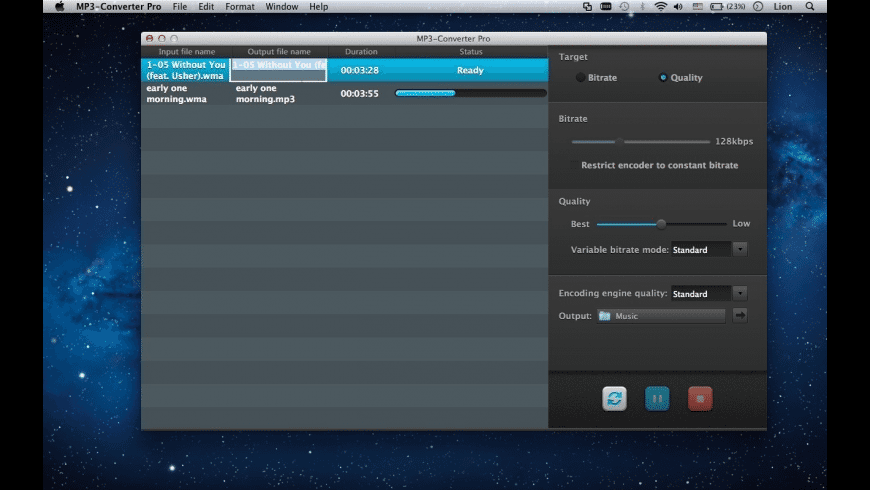
This AAC to MP3 converter can convert AAC (Advanced Audio Coding) files to MP3 (MPEG1/2 Audio Layer 3) audio. Select a AAC file (such as.m4a,.m4b,.m4r,.aac). Click button 'Convert' to start upload your file. Once upload completed, converter will redirect a web page to show the conversion result. If file upload process takes a very long. Sunday, 11 July 2010 14:00 fre:ac is a free audio converter and CD ripper with support for various popular formats and encoders. It converts freely between MP3, M4A/AAC, FLAC, WMA, Opus, Ogg Vorbis, Speex, Monkey's Audio (APE), WavPack, WAV and other formats.
At this point, we highly recommend you DRmare Apple Music Converter. It supports to remove DRM from iTunes songs and Apple Music. And it can convert iTunes protected AAC songs to MP3 and other audio formats with high quality.
Besides, with advanced technology, it can batch convert audio tracks at a faster speed which can save you much time and energy.
DRmare Apple Music Converter
- Support to remove DRM from iTunes and Apple Music
- Run at a faster speed with original audio quality kept
- Output audios to a lot of formats MP3, AAC, WAV, etc.
- Lifetime free update and support
Part 2. Steps to Convert Protected AAC Audio File to MP3
- Step 1Set up DRmare Audio Converter
- At the beginning, you could hit on the green 'Download' button to download & install DRmare program. Then follow the instruction to finish the installation. After then, you will see its shortcut on your computer desktop. Then please double click on it to open.
- Step 2Add protected AAC audio files
- Before converting protected AAC audio files, please make sure that you had downloaded and authorize the audios to play well in iTunes in advance. Once confirmed, then you can drag and drop them from iTunes to DRmare main screen. Or you can press on the 'Add Files' button to browse and choose the audio files to import.
- Step 3Set output format as MP3
- To convert protected AAC to MP3, you need to define them as MP3 in DRmare program. Just hit on the 'Format' button and it will pop up a setting window. In it, you can choose MP3 as the output audio format. And you can customize the audio parameters like codec, bit rate, channel, etc.
- Step 4Convert iTunes protected AAC to MP3
- At last, you could hit on 'Convert' button to start to convert protected AAC to MP3 format. After a while, you can get them converted and saved on your computer. You can click on the 'Converted' button next to 'Convert' button to find your audio files on your computer.
Part 3. How to Convert Protected AAC to MP3 in iTunes
Besides using the third-party tool, there is another way to convert protected AAC audio file to MP3. Here we go.
Method 1. Use iTunes Match Subscription
Note: Please use iTunes Match subscription to upgrade the protected AAC file to iTunes Plus. Then you will get DRM-free files and can go ahead.
Step 1. Open iTunes on your computer.
Step 2. Click on 'Preferences' > 'Import Settings' and select as MP3 encoder.
Step 3. Choose the AAC file you'd like to convert.
Step 4. Hit on 'File' > 'Create MP3 Version'.
However, in this way, sometimes you won't successfully upgrade all protected AAC audio files into DRM-free audios.
Method 2. Burn Protected AAC File to CD
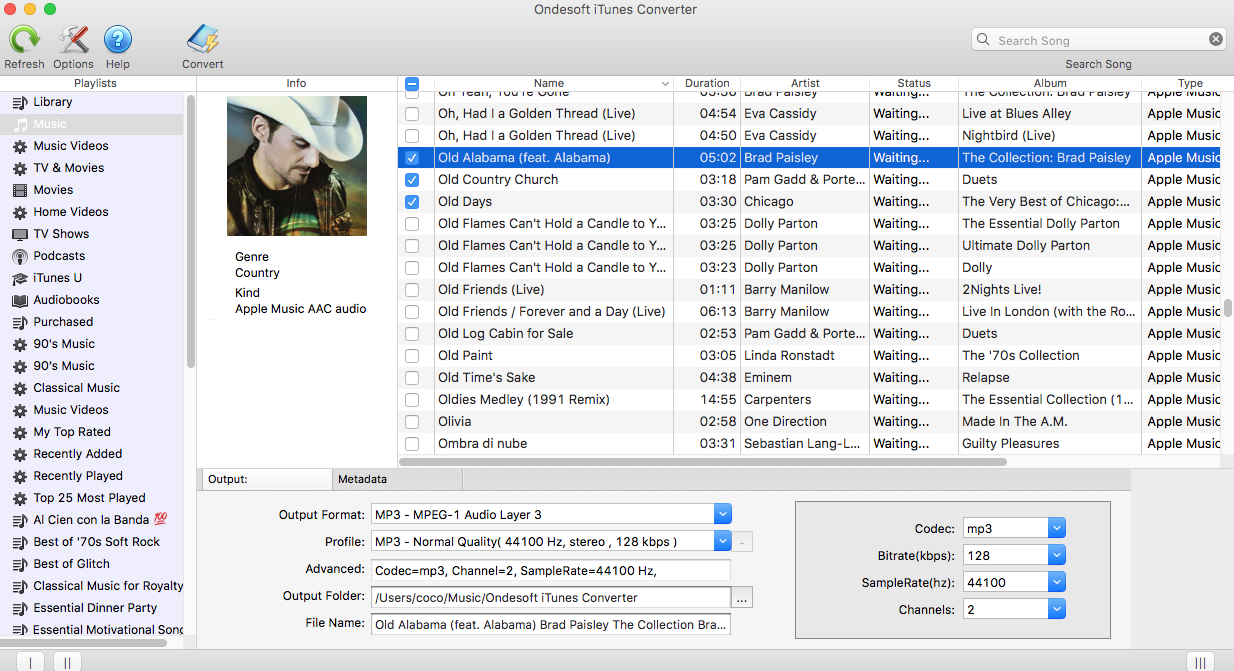
Step 1. Launch iTunes and create a new playlist.
Step 2. Add the protected AAC files to the new created playlist.
Step 3. Insert a blank CD to your computer and right-click the protected AAC file you like to burn.
Step 4. Once burned, then put the songs back to iTunes from CD via the MP3 encoder.
Then you can rip the audio files from CD to MP3 format in iTunes. But this way is time-consuming and quite complicated.
Convert Aac To Mp3 Mac Free Dvd Video Download
Extra Tip: More about AAC Files
AAC audio file: A standard AAC file (Advanced Audio Coding). It is from converting an MP3 or ripping a song from CD via iTunes' built-in AAC encoder.
MPEG audio file: A standard MP3 file, can be get from the web or rip a CD song by iTunes' built-in MP3 encoder.
Matched AAC audio file: A standard AAC audio file, except those you downloaded from your iCloud by iTunes Match on iOS device or computer.
Convert Aac To Mp3 Online
Apple Music AAC audio file: A standard AAC file, except the Apple Music in your library. It has DRM protection.
Convert Aac To Mp3 Mac Free Downloads
Protected AAC audio file: A default file type for the purchased songs from iTunes Store before 2009. It has DRM restriction.
Convert Aac To Mp3 Mac Free Pdf
Purchased AAC audio file: It comes from a protected AAC file upgraded to iTunes Plus format. It is DRM-free.