- OS X (from El Capitan 10.11 on) or OS X (before El Capitan 10.11). Once Docker is installed, open up the docker terminal and test it works with the command: docker run hello-world Note: Linux users might need to use sudo to run docker commands or follow post-installation steps.
- Garageband For Mac Os X El Capitan. Incredible music. In the key of easy. GarageBand is a fully equipped music creation studio right inside your Mac — with a complete sound library that includes instruments, presets for guitar and voice, and an incredible selection of session drummers and percussionists. With Touch Bar features for MacBook.
The Docker client contacted the Docker daemon. The Docker daemon pulled the 'hello-world' image from the Docker Hub. The Docker daemon created a new container from that image which runs the executable that produces the output you are currently reading. The Docker daemon streamed that output to the Docker client, which sent it to.
31 Jul 2016 #DockerA quick guide on how to run containers requiring a GUI with Docker for Mac and XQuartz.
This guide is assuming the following:
- OS X 10.11.5 (El Capitan)
- Docker for Mac 1.12 stable
- XQuartz 2.7.10 beta 2
- Jessie Frazelle’s Firefox Dockerfile

Prerequisites
XQuartz
You’ll need XQuartz, and normally you would probably install it via brew (but not this time):
XQuartz 2.7.9, which is the current one provided by brew, has a bug which will prevent you from following this guide. So, head on over and download XQuartz 2.7.10 beta 2 from here.
After installing XQuartz, log out and back in to OS X.
Docker for Mac
Download Docker for Mac 1.12 stable from here, install and run.
Go!
Run XQuartz in e.g. bash:
Install Docker El Capitan
In the XQuartz preferences, go to the “Security” tab and make sure you’ve got “Allow connections from network clients” ticked:
Again, in e.g. bash, run xhost and allow connections from your local machine:
You can now to run e.g. Jessie Frazelle’s Firefox container:
 Please enable JavaScript to view the comments powered by Disqus.
Installing Docker on Mac is pretty straightforward. It has a Graphical installer .dmg file. The installation provides Docker Engine, Docker CLI client, Docker Compose, Docker Machine, and Kitematic.
Pre-requisites for installing Docker on Mac
1. Docker requires OS X El Capitan 10.11 or newer macOS release running on a 2010 or newer Mac.
2. At least 4GB of RAM in the system.
Docker El Capitan Download
Installing Docker on Mac
1. Download Docker for mac from the url : https://download.docker.com/mac/stable/Docker.dmg
Docker El Capitan Free
2. Click on the Docker.dmg file you have just downloaded to mount the image and open the installer.
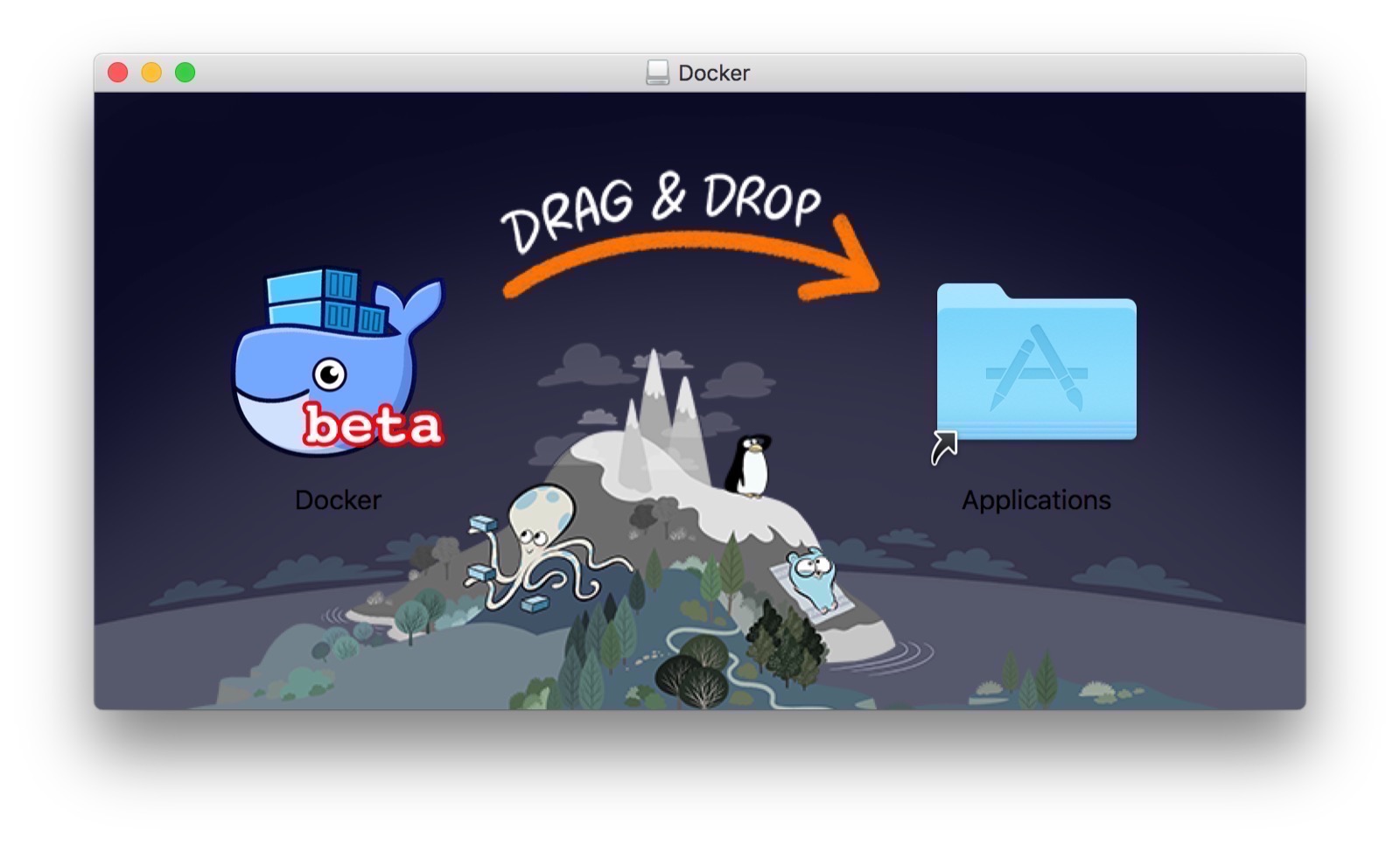
3. Drag and drop the Docker.app file into the Applications directory. Once you have dragged the Docker icon to your Applications folder, double-click on it and you will be asked whether you want to open the application you have downloaded. Saying yes will open the Docker installer:
5. Click next on the installer screen and follow the instructions in the installer.
Docker Desktop El Capitan
6. Once installed you would see an Icon in top-right icon bar.
7. Click the icon in the icon bar to check “About Docker” page.
8. You can also open a terminal and run below command to get information on the installed docker.
9. To check if Docker machine and Docker Compose are installed as well, use the command below.